
The Tucson Years
The evolution of storytelling

Those were wild days, filled with Southwestern writers and drunken poetry fests in Bisbee, Arizona.
I was returning to school for a degree in Oriental Studies, which is what they called Asian Studies back then. You needed to declare a minor, so I chose Creative Writing, with a focus on poetry.
As the years passed since leaving Tucson, the role that poetry played in my life diminished. It was easy to bury the pain it summoned, and the weight that it bore in trying to sustain me
The house on Speedway
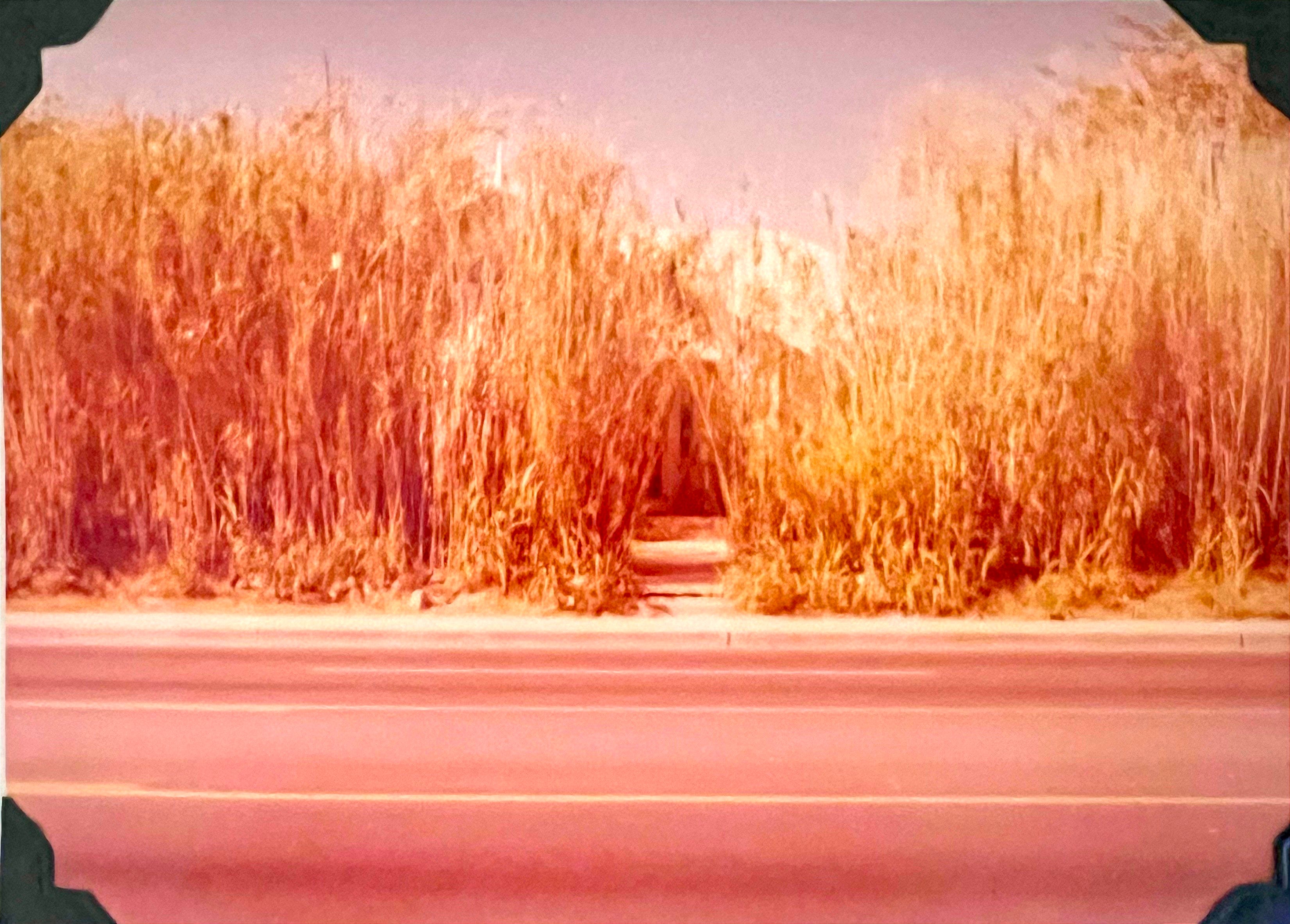
The first house I moved to in Tucson was directly across from the University of Arizona on Speedway, the busiest street in the city. But the bamboo that surrounded the front and two sides made for excellent sound barriers and protected us from the heat.
My time there was brief and at times lonely.
Amy, who had become my closest friend, ended up with one of my boyfriends at some point, and I moved out with Peter to the house on the east side. I knew Peter from up north, and he was the one who had invited me to rent a room in the house.
Did he have designs on me beforehand? I don’t know, but we ended up in the shower one night, became a thing, and moved east of campus together.
My days in Tucson were stuffed with words.
We developed a good routine on the east side.
Every morning, I’d ride my bike across town to the University for my classes in Mandarin, Chinese literature, and ancient Chinese history.
In the afternoons and evenings, I’d sit at the kitchen table and copy Chinese characters onto index cards. Then I’d write them again and again on sheets of paper, stroke by stroke, practicing pronunciation, until sound and meaning became rote.
There were assignments in translation.
My reward for interpreting those brief passages was entry to an entirely secluded world. Step by step, I walked into palaces, bedroom chambers, scenic vistas as I analyzed the works stroke by stroke until I could write out the poem’s meaning in English.
But it could be brutal, sometimes taking two or three dictionaries to get it done.
I remember the professor who told us we could never produce a poem in Chinese that was as authentic as a native speaker. It was not a challenge, just something like an admonishment in case we thought we were getting too close to breaking some unspoken barrier.
That was before I woke up, back home in Tucson screaming in Mandarin after spending three months studying in Taiwan.
They say you have truly mastered a language when you begin dreaming in it.
The sound of that nightmare coming out of me felt authentic.
The desk where I welcomed my poems into the world
Before heading to campus, I’d wake up and walk directly to the desk in the living room and free-write for 10 minutes.
This was a practice required by Richard Shelton. Shelton had been dubbed “The Poet Laureate of the Sonoran Desert,” for his desert- and environmentally-focused writing. His wife Lois was director of the Poetry Center when I was in school, and like several other husband and wife teams of the time, they held lofty positions in the arts community in Tucson.
Years later I would understand the affinity I had for Shelton despite the brash manner he exhibited in class. In the poetry analysis course I took with him, Shelton was sharp in his critique, and succinct with his praise.
I later learned that he had been working toward but never earned his doctorate from the U of A; yet he ended up teaching there. I identified with this relationship, given my history with Columbia University–rejected for a Master’s program but ended up teaching there.
When I think of the people I studied with at the U of A, when I remember the poets, I remember them collectively as “The Desert Poets.”
This was particularly true of Peter Wild.
A couple of afternoons a week, I’d join fewer than a dozen other students in a darkened classroom on campus. Wild would always wear sunglasses but never mentioned why. I thought he was high but maybe he had just spent too much time out in the desert.
Wild would return lines of poetry we had carefully typed on onion skin paper. We’d scramble to read through his barely legible notes before submitting to the terror of reading our work out loud.
These were poems produced with keystrokes of pain.
Many of mine had started as poems and notes I kept in a sketchbook the two years I had lived in the high desert north of Phoenix. Because I had arrived there shortly after losing my father at the tender age of 18, most of my writing came from a place of grief.
I had plenty of raw material to work with.
Wild helped me shape my work with both directional and pointed feedback. Perhaps the tone of the poem wasn’t aligned with the word choice. Or the ideas weren’t sufficiently explored. I became a better writer for it, and I have continued to look back at the early work throughout my evolution as a writer.
Poetry competitions and drunken evenings in Bisbee
But minoring in creative writing was not all dark rooms and poems about death.
It brought with it the power of community. The Poetry Center, housed in a small cottage across Speedway in those years, was a home for verse and writers dedicated to their craft. The cottage had been donated to the school by its founder, Ruth Stephan. Visiting poets often stayed there overnight.
I remember Lois Shelton graciously advising me as I struggled with the decision to select poetry as a minor. She listened to my backstory and then simply shared the benefits of the Center and the community with me, enabling me to make my own choice.
One of the highlights of those couple of years with the southwestern poets was a competition, attended by hundreds of people close to or associated with the writing community.
Steve Orlen read a poem that may or may not have been a sestina. It was in any case a very complex construction.
I can still see and hear people cheering at the end of each line; and there was laughter. The poetry world in which I lived could be rather raucous at times.
Nothing exemplified that world more than the Bisbee Poetry Festival. Bisbee was a mining town in its past and later became a home for hippies and counter-cultural cultural activities.
Such as poetry festivals. This one was founded by Allen Ginsburg.
The year I went, I was treated to readings by Ginsberg, Peter Orlofsky, Michael McClure, Diane Wakowski, and others. We stayed in the landmark Copper Queen Hotel, built in 1902 for visiting investors in the mines and felt like luminaries. We were treated to a weekend of irreverent but incredibly well-written verse.
These poets were the embodiment of living your craft. Seeing them read and speak about the genesis of their work taught me more of the inner world of poets than I could learn in any classroom or book.
They talked about how certain sounds turned into words, about how language came to them from unusual sources, about how they composed their magic.
I saw them as something wild yet capable of great precision.
Leaving the wild behind
We left Tucson after I graduated and traveled around Europe for three months before settling down in New York City.
When we drove away, I had no idea I was leaving the poets behind.
I had flown across the Pacific to live amongst the people who spoke the language reflected in pictographs.
And I drove across desert mountains to listen to cowboy poets.
It was time to return to the city and to start a life in the society to which I had been born. It was time to let go of what had made my life so rich for the period of time I lived in Tucson, but I didn’t realize it. Letting go wasn’t intentional.
Except for Amber
When I moved back to New York, I left my dog Amber with friends who owned a ranch in the foothills. She was wild and looked like a Dingo. She’d never make it in the city.
I named her Amber for the color of her eyes, and I rescued her after spotting her hiding in the bushes one night on my way home from school. That was when I was still living in the house on Speedway.
That night, I ran across Speedway and into the house to get Amy to assist with the rescue. We wrangled her after a fairly wild chase on the campus.
I later learned that Amber had run away from the ranch and traveled 10 miles back to town to find me. It broke my heart to know she thought she would still find us there.
Nearly 40 years later, I rescued another dog, this time from his foster home. He looks and acts just like Amber except he is black and white.
Amber being reincarnated as Shadow? That was the sign of love echoing across the years from my time out west.
I stopped writing poetry after a few years back in the city. Though there are plenty of poets here, so far, not even grief could draw single lines of perfection out of me like the desert did.
My words, like me, have been tamed into other forms of storytelling.
This is the latest in my Notes-To-Post series, Bite-Sized Storytelling based on notes of 300 words or less.
Oh yes! The beat poets and the feel! Textured and rich!
Nice recounting